

Nobody escapes being wounded. We are all wounded people, whether physically, emotionally, mentally, or spiritually. The main question is not, “How can we hide our wounds?” so we don’t have to be embarrassed, but “How can we put our woundedness in the service of others?” When our wounds cease to be a source of shame, and become a source of healing, we have become wounded healers.
Intro
Over the past three weeks, we’ve explored what happens beneath the surface in unhealthy environments. We explored the difference between refinement and erosion. We explored what it means to remain whole in difficult places. And last week, we considered how faithfulness and self-abandonment can sometimes look surprisingly similar.
But what happens after we leave? What happens when the environment is behind us, yet parts of it still seem to live within us? Many of us assume that once we leave, healing will naturally follow. That distance alone will restore what was lost. But leaving and healing are not the same thing.
Leaving changes our circumstances. Healing changes what the environment left behind.
Arrive
One of the things that surprised me most after leaving was how much of the environment I had carried with me. The meetings were over. The expectations were gone. The pressure had ended. But something remained. I kept questioning myself. Even when something felt obvious. Even when something felt healthy. Even when my instincts were telling me something was right.
After spending the better part of a year or two second-guessing my own judgment, trust didn’t return overnight. I had become so accustomed to questioning my perception that I no longer knew how to listen to it.
The environment was gone. But the habit of self-doubt remained. Looking back, I realized that survival mode had taught me something dangerous: to distrust my own ability to recognize reality.
And even after leaving, that lesson continued to shape the way I moved through the world.
Receive
Leaving Doesn’t Equal Healing
For a long time, I assumed that once I left, everything would begin getting better. In some ways, it did. The pressure was gone. The unhealthy dynamics were no longer a daily reality. But healing proved to be slower than leaving.
Because while I had removed myself from the environment, I had not yet addressed everything the environment had placed within me. The fear. The self-doubt. The hyper vigilance. The tendency to second-guess myself. The environment was no longer shaping me from the outside. But its influence was still shaping me from the inside.
Healing began when I stopped asking, “Why am I still struggling with this?” And started asking, “What is this experience trying to teach me about what happened to me?”
Sometimes healing begins when we stop judging our wounds and start paying attention to them.
Grieving What Was Lost
Part of healing involved grieving. Not just grieving what happened. Grieving what could have been. I grieved the mission I believed in. The promises that had been made. The relationships I thought were stronger than they were. The version of the story I hoped would be true.
Part of what made this season especially difficult was that these experiences weren’t happening in isolation. At the same time I was beginning to recognize unhealthy dynamics at work, my wife and I were also navigating the painful process of leaving a church community we had once trusted.
The overlap made it difficult to know where one wound ended and another began. As I stepped back, I began noticing familiar patterns. The same pressure to remain silent. The same confusion between loyalty and faithfulness. The same tendency to dismiss concerns in the name of unity. The same misuse of spiritual language. What I was grieving wasn’t only a workplace experience or a church experience.
I was grieving the realization that some of the patterns I had hoped were isolated seemed to exist in multiple places I had once considered safe. And that realization carried its own kind of sorrow. Part of healing involved grieving not only what happened, but what was revealed through it.
For a long time, I believed these relationships were built on honesty, trust, and a shared desire to pursue what was true. But as I began naming some of the abuse and unhealthy dynamics my wife and I had experienced in that previous church environment, something seemed to change.
Almost all of the people in the work environment were closely connected to that church and to some of the individuals I was describing. Whether intentional or not, the relationships felt different after that. And it forced me to wrestle with difficult questions:
Was honesty welcome only when it wasn’t costly?
What happened when I challenged the narrative?
What did that reveal about the environment?
What did it reveal about the relationships themselves?
I wasn’t just grieving the way I had been treated. I was grieving the realization that some relationships feel secure only as long as everyone agrees. And that’s a painful thing to discover. Because healthy relationships are strengthened by truth. Unhealthy relationships often feel threatened by it.
Compassion Without Excusing
As time passed, I found something unexpected happening. I began to feel compassion. Not because what happened was okay, or they weren’t responsible for their own actions. Not because it didn’t cause harm. And not because the wounds weren’t real. But because I began to wonder whether they knew any other way.
The more I reflected on the environment, the more I recognized familiar patterns. Many of the same dynamics existed in the church my wife and I had just left. The same pressure. The same misuse of spiritual language. The same confusion between loyalty and faithfulness. The same expectation that people silence concerns for the sake of unity.
At some point I realized something difficult: people often pass on what they have never healed from. What if the things that wounded me had first wounded them? What if they were simply repeating what had been modeled for them? That realization didn’t erase the harm.
Understanding someone’s wounds doesn’t erase the wounds they cause. But it did soften my heart. Because healing isn’t only learning to tell the truth about what happened. It’s learning to see people clearly without becoming consumed by anger.
Healing doesn’t require us to excuse harm. But it may eventually invite us to release our need to carry it forever.
Respond
Spend some time sitting with these question this week:
What has changed since leaving - and what still remains?
Are there ways I can continue to question myself because of what I experienced?
What losses have I not fully grieved?
What truths about the past am I still resisting?
Is there a difference between understanding someone’s wounds and excusing their behavior?
What might it look like to tell the truth about what happened without carrying anger into the future?
Don’t rush to answer. Healing rarely happens all at once. It often unfolds one honest step at a time.
On Repeat
The Wound Is Where The Light Gets In - Jason Gray
As I worked through this week’s issue, I kept coming back to how often healing begins in places we’d rather avoid. Most of us would prefer to move on. To leave the past behind. To convince ourselves we’re okay. But healing rarely grows in what we ignore.
It grows in what we acknowledge. Throughout this series, we’ve explored what was happening beneath the surface. The erosion we didn’t recognize. The ways we learned to disconnect from ourselves. The burdens we carried in the name of faithfulness. The wounds we took with us long after we left.
And perhaps that’s what healing ultimately requires: the courage to bring those things into the light. Not to relive them. Not to become defined by them. But to finally tell the truth about them.
That’s why this week’s song resonates with me. The title itself feels like a reminder: the wound is where the light gets in. The places we would rather hide are often the very places God wants to meet us. The places we wish weren’t part of our story are often the places where grace does some of its deepest work.
Healing doesn’t begin when we pretend the wound isn’t there. It begins when we stop hiding it. It begins when we allow light into places that have remained in the shadows for far too long. And maybe that’s what this journey beneath the surface has been about all along.
Not avoiding the wound. Not being consumed by it. But allowing God to meet us there.
Enjoy this week’s On Repeat!
Companion Conversation
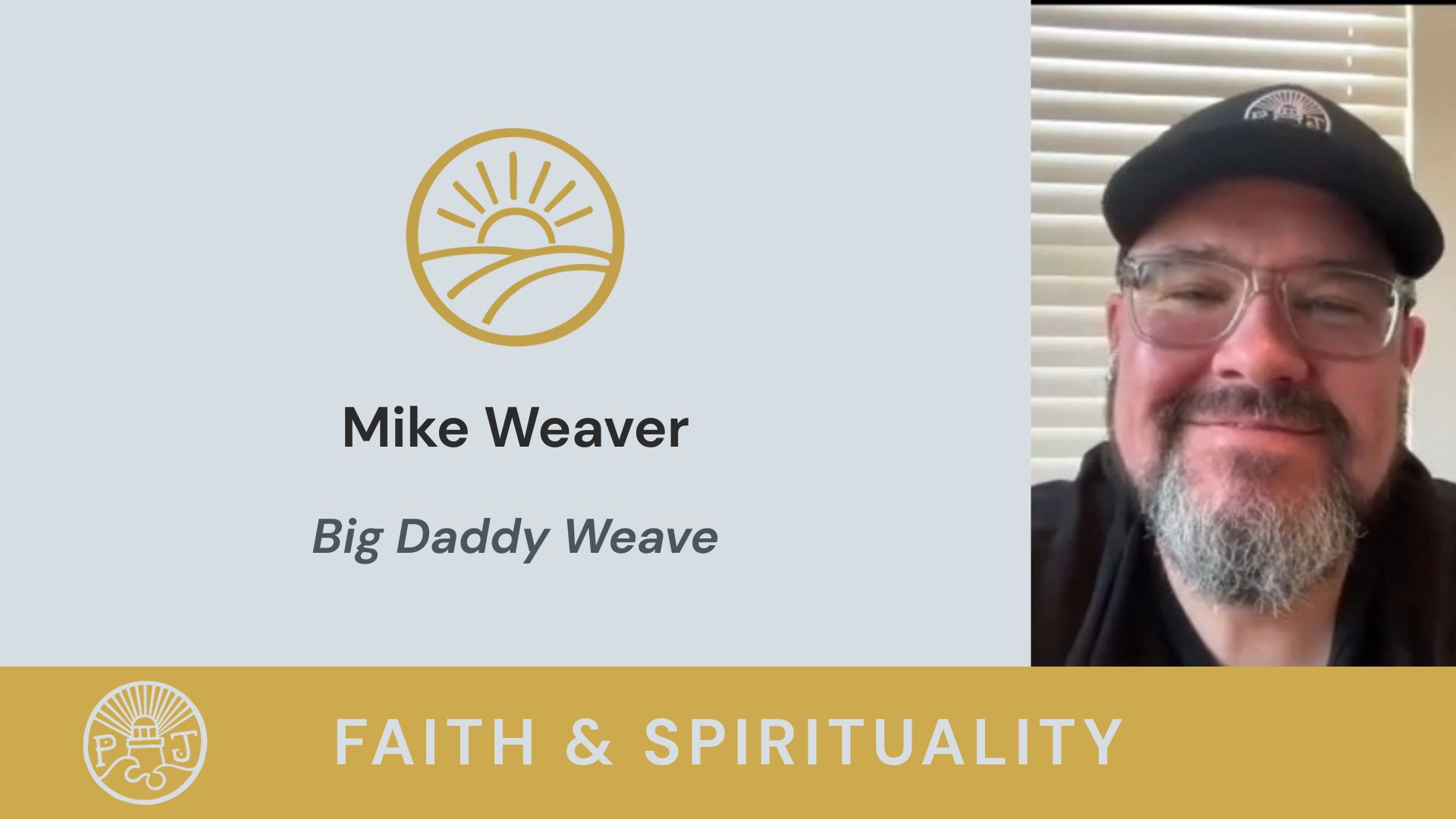
As I reflected on healing, I found myself thinking about a conversation I had the opportunity to have with Mike Weaver from Big Daddy Weave. Throughout the years, Big Daddy Weave’s music has helped many people navigate seasons of pain, loss, healing, and hope. Our conversation touched on many of those same themes and feels especially relevant as we bring this series to a close. I have had the opportunity to get to know Mike the last few years, and he is one of the most genuine people I know, and his love for Jesus and care for people radiates to others.
I had the opportunity to have him on the podcast a few years ago, so if you haven’t had a change to watch it yet, you can check it out below if you would like to go deeper. Perhaps it will be a helpful companion as you continue your own journey beyond Beneath The Surface.
Series Closing
Over the past four weeks, we’ve explored what happens beneath the surface. We’ve talked about erosion and refinement. Remaining whole. Faithfulness and self-abandonment. Healing after leaving. My hope is not that this series provided all the answers. My hope is that it helped us pay attention.
Because healing often begins when we stop running from what is true. As I reflected on this series as a whole, one song kept coming to mind: Let It Begin by Big Daddy Weave.
Not because the journey is finished. But because perhaps that’s where many of us find ourselves. Not at the end. But at the beginning. Beginning to tell the truth. Beginning to grieve. Beginning to heal. Beginning to trust God with the parts of our story we’ve kept hidden for too long. We’ve had several On Repeat songs that were more reflective, so I want to close out the series with a hopeful song as we all take one faithful step forward.
And maybe that’s enough for now. Let it begin!
In Christ,
Ben
